


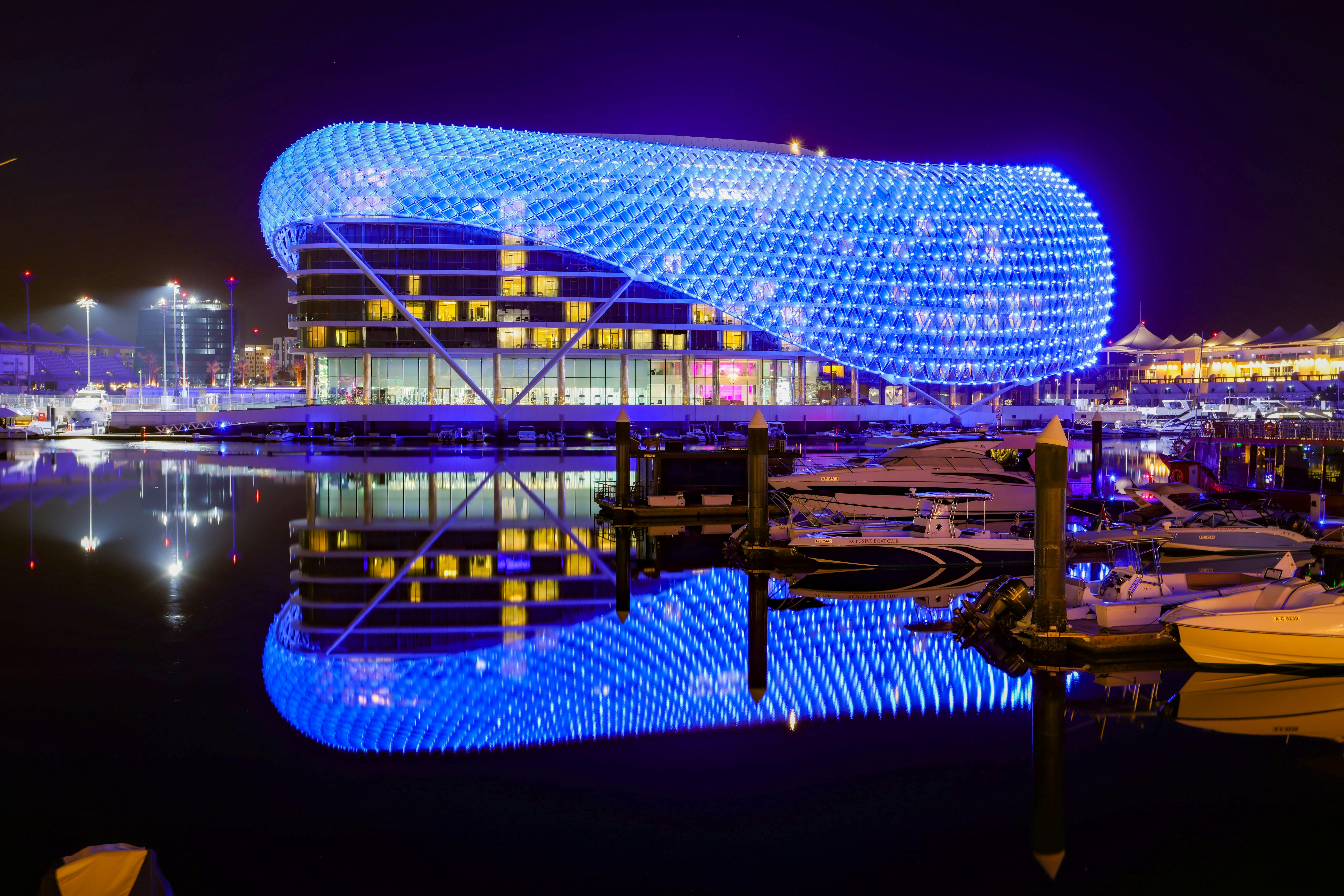
Formula 1 likes its endings neat. Abu Dhabi provides that: floodlights on, sponsors aligned, fireworks queued with military precision. The final race is run, the championship settled, and the sport begins the familiar process of filing one season away while quietly selling the next.
But the real ending of 2025 was less dramatic and far more revealing. When the noise faded, Formula 1 did not feel relieved or exhausted. It felt settled.
This was the season when the sport stopped asking what it might become and instead showed, through a series of small, telling decisions, what it already is: a global business, tightly governed, commercially confident, and increasingly comfortable with that identity.
That confidence rests, first and foremost, on money behaving itself.
The cost cap, once Formula 1’s most volatile talking point, barely disrupted the rhythm of 2025. Audits continued, clarifications were issued, and teams grumbled in the familiar, low-level way, but there was no sense of crisis. The system held. More revealing was how openly teams acknowledged the constraints. McLaren spoke during the European rounds about batching upgrade packages rather than chasing marginal gains every weekend, explicitly referencing the need to balance performance against long-term development budgets. Aston Martin framed much of its season around infrastructure investment and process-building rather than headline-grabbing leaps. Even Mercedes and Red Bull admitted that aerodynamic development, staffing and upgrade timing now sit in direct competition with one another.
Formula 1 did not become fair in 2025. It became predictable.
And predictability is what turns a sport into an asset class.
Which helps explain why ownership, rather than championships, became one of the season’s most revealing subplots. In 2025, every Formula 1 team was valued at more than $1 billion, with several now comfortably in multi-billion-dollar territory, pushing the combined value of the grid beyond $34 billion, figures once associated with major American sports leagues rather than motorsport. This was not speculative money chasing glamour. It was patient capital buying scarcity.
Mercedes provided the clearest and most instructive example. Late in the season, Toto Wolff sold 15 per cent of his stake in the team to American billionaire George Kurtz. Crucially, this was not a retreat, nor a dilution driven by necessity. Wolff remains team principal and CEO, Mercedes-Benz retains its shareholding, and INEOS continues as a strategic partner. What changed was the shareholder register, and, more importantly, the implied valuation.
This was a liquidity event in a mature asset, not a founder stepping aside. A reminder that Formula 1 teams can now accommodate new capital without destabilising governance or sporting intent. The transaction placed Mercedes alongside the valuation benchmarks of elite football clubs and U.S. franchises, underlining just how far the sport’s financial credibility has travelled.
McLaren told a similar story, with long-term Gulf capital consolidating its position as on-track success returned. Elsewhere, minority stakes changed hands quietly, at valuations that would once have seemed fanciful for teams not winning championships.
Ten teams. Fixed operating costs. Revenue sharing locked in by the Concorde Agreement. Global exposure guaranteed. Formula 1, once chaotic and financially fragile, now looks unmistakably like a closed league designed to reward stability.
That stability has reshaped how the sport sells itself.
Sponsorship in 2025 was abundant but rarely frantic. Financial services, fintech and technology firms deepened their presence, not as logo buyers but as integrated partners. McLaren’s expanding portfolio, spanning cloud infrastructure, payments and data platforms, operated year-round rather than race-to-race. Audi, preparing for its full works entry, secured Revolut as a title partner well ahead of 2026, signalling confidence not just in the team but in Formula 1 as a long-term commercial platform. The language changed accordingly. Teams talked less about exposure and more about integration. The car was no longer the product. It was the interface.
None of this works without attention, and in 2025 Formula 1 confirmed that it still has it — and at scale. The sport now counts around 826 million global fans, with a notably broadening demographic profile, including a 42 per cent female audience and some of its fastest growth among women aged 18 to 24. This is not a niche audience. It is a mass, global one.
In the United States, the novelty phase is over. Las Vegas delivered spectacle, Miami retained its festival atmosphere, but the more telling signal came in consistency. Viewership held across the season rather than spiking and falling away. Formula 1 stopped introducing itself. It simply turned up and expected to be watched.
Yet 2025 also revealed the limits of Formula 1’s modern economic model.
Zandvoort, one of the most atmospheric races on the calendar and home to some of the sport’s most passionate support, confirmed that 2026 would be its final appearance. The reason was not lack of demand, tickets continued to sell, but cost. Hosting Formula 1 at the required scale had become too expensive to justify long-term without state-level backing. It was a quiet but telling moment. A reminder that modern Formula 1 increasingly favours destinations with deep pockets, political support and global branding ambitions. Abu Dhabi, Singapore and Las Vegas thrive under this model. Zandvoort bowed out gracefully.
Even the drivers reflected the wider shift.
In 2025, drivers were not just competitors; they were platforms. Lewis Hamilton continued to expand his portfolio across fashion, film and activism, reinforcing his status as a global cultural figure rather than a retiring athlete. Lando Norris leaned further into digital content, gaming and youth culture, becoming one of the sport’s most commercially accessible champions after his title win. Charles Leclerc deepened luxury and lifestyle partnerships aligned with Ferrari’s brand world, while Max Verstappen, more reserved off track, became central to Red Bull’s global marketing engine and signed a wide-ranging merchandise and licensing deal with Fanatics. Drivers were no longer simply sponsored. They were assets.
And hovering over all of this was a sense of transition.
2025 was the final season of Formula 1 as a ten-team grid. From 2026, Cadillac will enter with Andretti backing and General Motors support, bringing American manufacturing muscle and long-term ambition. At the same time, Sauber’s long evolution will culminate in its rebirth as Audi — a full works operation with a clear strategic horizon. This was not expansion for expansion’s sake. It was controlled growth, aligned with the same themes that defined the season just finished: stability, credibility and long-term value.
Across 2025, Formula 1 did not reinvent itself. It adjusted quietly. Ownership structures matured. Commercial models sharpened. Audiences stayed. Money behaved.
There was no manifesto, no grand declaration that Formula 1 was now a business first and a sport second. It simply acted like one, week after week, race after race.
And by the time the fireworks lit up the Abu Dhabi night sky, that reality was impossible to ignore.
Formula 1 has reached a point many sports never do: it understands exactly what it is, who it serves, and how it sustains itself.
Sports that get there tend to last.
The rest just make better nostalgia.